Spotlight On The People Behind The ClimateMusic Project

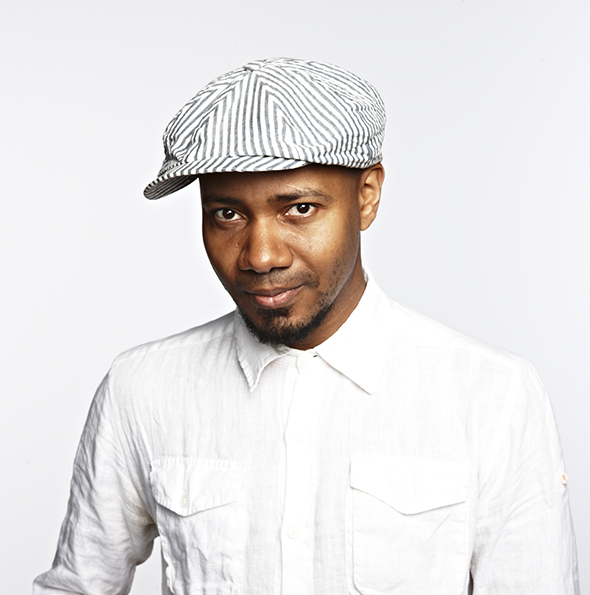
OUR TEAM IS MADE UP OF HIGHLY DIVERSE, CREATIVE, TALENTED, AND ENERGETIC INDIVIDUALS, LIKE COMPOSER ERIK IAN WALKER 

Erik has been writing and recording music for theater, dance, film and television in the Bay Area since 1982. His extensive collaborations include experimental theater/dance performance, film, and rock and jazz ensembles. His latest album, Criteria Obsession with his band Castle Canyon, is an entertaining romp through the instrumental rock landscape. Erik runs WackoWorld Music as well as the recording studio Crib Nebula in San Francisco. He teaches musicianship, improvisation, synthesizer madness and piano for all ages at his studio and at the Community Music Center in San Francisco. Erik holds a degree in composition from the San Francisco Conservatory of Music.

How did you get started as a composer and musician? 

At an early age I was drawn to music so naturally, that it can be hard to point to where the ‘start’ is.  But, in terms of career, I started forming my own bands, performing my music when I was 15. At 20, I became interested in music for modern dance, and collaborated with many choreographers, setting music to their dances. I also accompanied dance classes. Those were my first music ‘jobs’, outside of playing gigs with my bands. 

Who were your role models as you were just getting started?

My parents and my oldest brother, Jeff, were my role models. My parents were very energetic and encouraged active lives that included creativity as a given- a somewhat unusual mixture of sports and arts. Jeff wrote poetry and songs, and had taught himself how to play guitar. My first songs were written by using his poems for lyrics.

In music, it would be Igor Stravinsky, Dave Brubeck, Willie Dixon, Count Basie, Frank Zappa, Beethoven, Keith Emerson, and the band Cream (Jack Bruce and Ginger Baker).  Sometimes, in music, ‘role models’ means you are inspired by their music and wish to fashion music like that.  Zappa, though, was a more clear role model because he led a large ensemble, toured regularly, was very disciplined about his work, and I could go see his bands pretty often. Emerson was influential because his level and style of play became a clear goal.  

 Why are you involved in The ClimateMusic Project?

I welcomed the invitation to write and perform ‘Climate’ for CMP because I feel very strongly about the necessity to communicate the urgency of stopping the negative effects of human caused climate change, and, being a composer, this was the best use of my talents to do something. I also like the intersection of science and music very much, so it was a good fit.

As an artist, was the process of creating Climate in collaboration with scientists challenging? If so, how? If not, why not? 

Why, it was as easy as pie, if that pie was about as large as the planet.  

Seriously, I am used to collaboration, and though working with scientists was a new twist, I found it productive and interesting. Decisions that had to be made were whether the climate data was going to be the music (sonification), or where the data was going to alter music composed before the data collided with it. We chose the latter, as that was the more interesting scenario for a dramatic rendering.

Figuring out the best way to create the piece, and how to incorporate climate change data as a control on the written music was a challenge. The hardest part was composing a ‘theme’ and framework that would not devolve too fast as the data we were using began to change the music. There is a subjective response of the ear, outside of prescribed numbers, that gauges where ‘double’ of something is, for example. So, we had to find an ‘end point’ of the piece, where the greatest degree of climate change would be, hear what that would sound like, and work backward from there. I had to compose a few themes and test them out before we arrived at the one we used to be the basis for Climate (the unused ones would fall apart too fast). Working with a band while doing this was invaluable. Their input was very important. 

When external data is determining how and when your music changes, it is very different from how a composer works.  A musical idea you’d like to repeat…you don’t get to, because the data has pushed it further down the line. I found this fascinating, fun, but also quite different from being in control of one’s compositional decisions. 


With so many social and environmental crises in the world today, do you think music has the power to effect social change? Why or why not? 

Yes I always think music does. I wouldn’t be a musician if I didn’t. Music communicates at a primal, non-verbal (even songs with words, as odd as that might sound) level that spoken or written word does not do. You always have a chance to get to a listener and carry them somewhere different, and possibly get them to see things in a new light. I find this to be especially true for people who may already agree with a cause, but the music opens a door and they put their heart into it as a result of the music. The connection becomes deeper. With Climate we have certainly found this to be true with our audiences. 

What advice would you give to someone who is looking to get involved in the fight against climate change? 

Do what you can using the talents you have, whatever type of energy you can put into your activism to help educate people, and to get real policy enacted by your local, state and federal governments. Everyone is going to be making sacrifices, but the biggest changes will have to come from the top down, though, as we find, those changes often start from the grassroots and climb up. Vote for the sake of all humans, and to avert social, cultural and environmental disaster. Put people in office that will do the right thing. They aren’t doing it now, that’s for sure. 

Where can people hear your music? 

Erik Ian Walker can be found at Bottomfeeder Records on Bandcamp ( https://bottomfeederrecords.bandcamp.com),  Apple Music, CDBaby, Spotify, and all digital streaming outlets.  
Kinetech Arts to premiere new collaborative work at Leonardo Convening, Nov 3

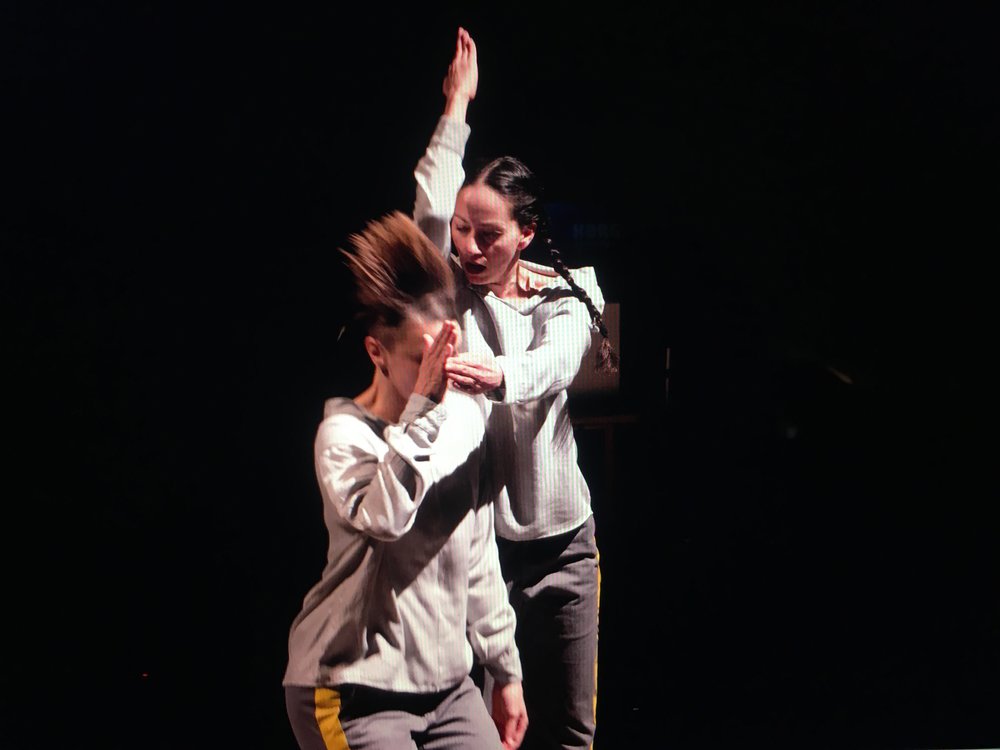
We are delighted to announce that our friends at Kinetech Arts will be premiering new work based on our portfolio composition, Icarus in Flight, by composer Richard Festinger, at the Leonardo Convening, November 3rd in San Francisco. “1945 – 2015” follows the trajectory of climate change in a metaphorical and concrete manner. It is the second part of a three movement series, which focuses on the human centric paradigm that has dominated the last centuries. From 1945 to 2015, the amount of carbon in the atmosphere rose 8.4 times, the population grew 3 times and human land use increased to 39%. This piece is a collaboration between The ClimateMusic Project, composer Richard Festinger, and Kinetech Arts with choreographers Daiane Lopes da Silva and Tanja London.

Photographer: Weidong Yang; Pictured: Daiane Lopes da Silva and Tanja London

CLICK ON LOGO IMAGE FOR DETAILS ABOUT THE CONVENING.

Artists sound out on climate at Play for the Planet

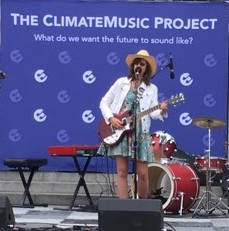
Our Global Climate Action Summit affiliate event, Play for the Planet, took place on Wednesday, September 12th in front of San Francisco’s main public library, and just down the street from City Hall, where mayors from around the world were meeting.  

The afternoon also included opportunities for the public to talk with members of our science team as well as our solutions partners.

Our focus remains enabling the creation of science-guided climatemusic, but this light-hearted afternoon turned out to be a great way to engage talented artists  and the general public in a conversation about climate change.  We’ll likely do it again on appropriate occasions, so dust off that guitar and watch our calendar for your opportunity to Play for the Planet!

Spotlight on the People Behind The ClimateMusic Project

OUR TEAM IS MADE UP OF HIGHLY DIVERSE, CREATIVE, TALENTED, AND ENERGETIC INDIVIDUALS LIKE DR. ALISON MARKLEIN, ONE OF OUR SCIENCE ADVISORS. 

Alison Marklein is a quantitative biogeochemist who focuses on the effects of soil chemistry, climate change, agricultural management on soil carbon storage and plant growth. Her past research has focused on how interactions between nitrogen and phosphorus affect terrestrial carbon sequestration and the dynamics of plants and microbes. In addition to her “day job”, Alison is an accomplished musician! 

1. What’s your role at The ClimateMusic Project?

I’m one of the science advisors of The ClimateMusic Project. I help compile the data that are used for the pieces, and work with the composers and musicians to help them understand the data. I also love sharing how scientists use all sorts of clues (data) to show how we figure out the way the world works.

2. Why are you involved? 

I really believe that my science is important and relevant to the world, but I don’t immediately connect science with policy makers or the general public in my day-to-day. Being a science advisor to The ClimateMusic Project helps my science have greater impact on the world and connects me with a broader community. 

On a more personal level, I had a college professor who would say “Whatever your passion is, you can use it to help the planet,” and the ClimateMusic project really embodies that philosophy for me. One of my passions is definitely science, and I have that one covered with my day job, but I’m also a musician and love that I’m pursing that passion more.

3. What do you think this collaboration between scientists and artists can achieve?

There is so much diversity in what moves people, and how people learn, so it’s really important to use all different mediums to reach a lot of people. By collaborating with artists, scientists like me can really increase the impact of our research beyond the people who get really excited about numbers and charts.

4. What’s your favorite kind of music, and with whom would you like to see The ClimateMusic Project collaborate? 

My favorite genre of music is post-punk.  Do you think we can get Patti Smith??

5. What advice would you give to someone who is looking to get involved in the fight against climate change? 

Climate change is a huge, complicated, and daunting issue to tackle. This kind of challenge needs all different kinds of people. If you are looking to work towards climate solutions, I recommend figuring out what aspect of climate change feels exciting to you, gives you hope, and takes advantage of your own strengths and interests. You can then team up with people who are motivated by other aspects of the problem – and trust them to fill in the parts that seem overwhelming to you. For example, I love the science of climate change, from the molecular level to the whole earth, but the more social aspects of climate change sometimes overwhelm me. That’s why The ClimateMusic Project is such a good fit for me – we make the science meaningful to a broader group of people, motivate action, and direct the audience to our action partners.

Spotlight on the People Behind The ClimateMusic Project

Our team is made up of highly diverse, creative, talented, and energetic individuals like Dr. Rose Abramoff, one of our science advisors.

Rose is a Postdoctoral Research Fellow at Lawrence Berkeley National Laboratory. Her research explores the effect of global change on biogeochemical cycling in soils. She earned her PhD in Biology with a Certificate in Terrestrial Biogeoscience from Boston University in 2015, and also brings a background in theater and dance to The ClimateMusic Project.

1. What’s your role at The ClimateMusic Project?

I am one of four science advisors that work with the artists CMP comissions to create musical, visual and/or performative art. We discuss the scope of projects; gather, organize and interpret data; and work with artists to ensure that their pieces reflect publicly-accessible, peer-review climate data in a transparent and accurate way.

2. Why are you involved?

I want people to see (through art) what I’ve seen. Some of what I’ve seen are just numbers on a screen: long-term data sets showing the dramatic changes to our environment caused by fossil fuel emission and land use change. But I have also worked in the field, and have sunk a length of rebar into the melted permafrost in Northern Alaska and been shocked at how far down we could go – further than ever recorded in that location. I have seen a wave of hemlock woolly adelgid – a pest whose northward expansion is enabled by warmer winter temperatures – decimate a historic grove of hemlocks that I used to study, home to coveted edible mushrooms, local fauna, and massive stores of carbon. I want to create an experience where people can feel what I feel, understand what I understand, as I sink past last year’s melt depth mark, and feel no resistance.

3. What do you think this collaboration between scientists and artists can achieve?

Climate science is growing increasingly interdisciplinary and so are its solutions. Our weakness (our great numbers that demand food and energy) can also be our strength, when mobilized to affect policy, to invent sustainable technologies, and to support vulnerable populations. That mobilization comes first from passion, and passion from effective communication. Art is one of our oldest means of communication, one of the earmarks anthropologists use to identify modern humans. We can all understand this medium. It is deeply felt, and easily remembered.

4. What’s your favorite kind of music, and with whom would you like to see The ClimateMusic Project collaborate? 

I love popular music from different countries and time-periods, particularly folk, indie, and afrobeat. I like music that reflects our history of human migration and merging cultures. It is fantastic to see CMP reaching out to all kinds of artists.

5. What advice would you give to someone who is looking to get involved in the fight against climate change?

Every community has opportunities to increase resilience and capacity. Climate change is not an isolated issue, but intersects with poverty, health care, minority rights, land management, and governance. Look around your community and see where climate change may already be affecting people’s health, safety, and quality of life

Icarus takes flight!

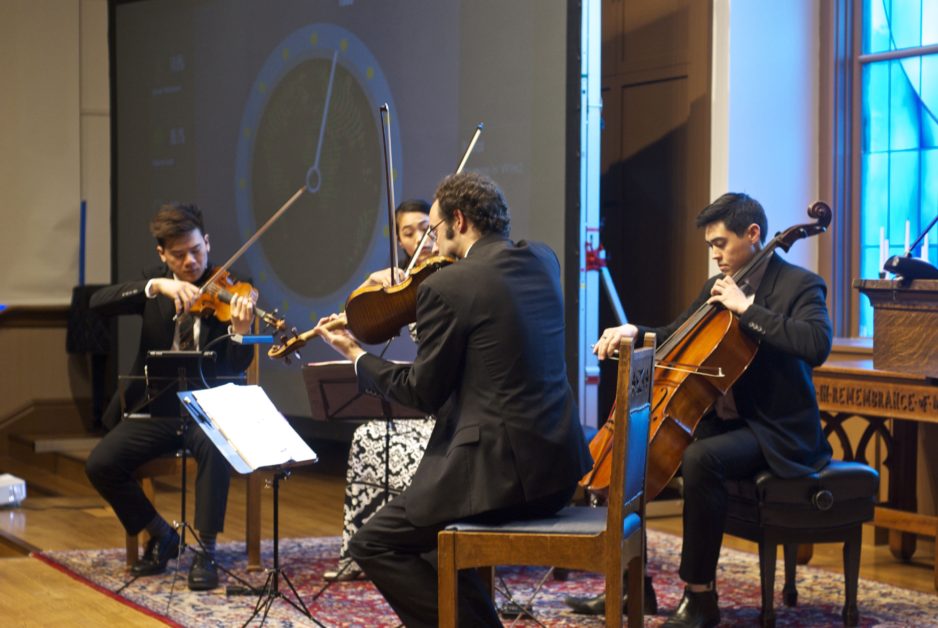
We celebrated the premiere of our newest portfolio work, Icarus in Flight,  on June 9th at a packed performance at the Noe Valley Ministry in San Francisco.  This new composition, by composer Richard Festinger in collaboration with The ClimateMusic Project, tracks three human drivers of climate change from 1880 to 2080.  The award-winning Telegraph Quartet   performed the work to a standing ovation.  

Following the performance, the audience engaged with a panel  that included Dr. William CollinsDr. Chris Luebkeman, composer Richard FestingerStephan Crawford, and violinist Eric Chin

The evening also included an opportunity for the audience to interact with our solutions partners, including The Global Footprint NetworkRe-VolvInterfaith Power and Light, and CoolEffect, all of which offer ways in which the public can actively engage in positive action at home and in our communities.  

Special thanks to our collaborators on the content for the evening, Arup and Kinetech Arts, as well as to our sponsors, The Zellerbach Family FoundationMacroclimate, and The University of San Francisco’s Graduate Program in Energy Systems Management

Thank you, Mexico City!

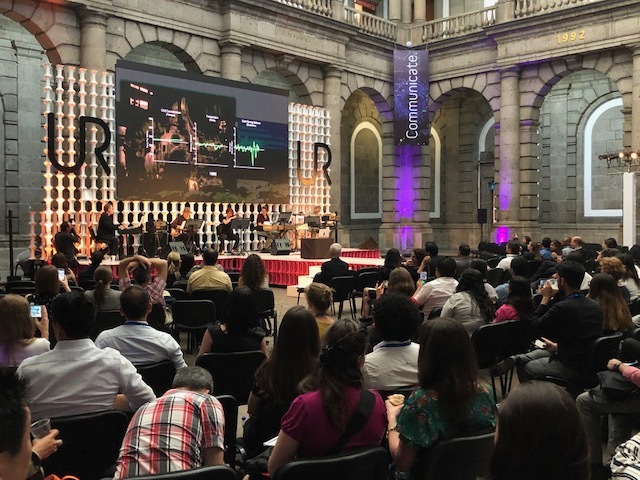
We performed Climate to a standing ovation at UR18, a global conference that included 1000+ representatives of government, industry, and NGOs from 100 countries.  The event was held at the 18th Century Palacio de Mineria in Mexico City’s historic center.   We were honored to have James Balog join the post-concert panel discussion with our chief science advisor, Dr. Bill Collins, composer Erik Ian Walker, and Stephan Crawford. 

The ClimateMusic Project: Live at SFJAZZ with Bill Nye!

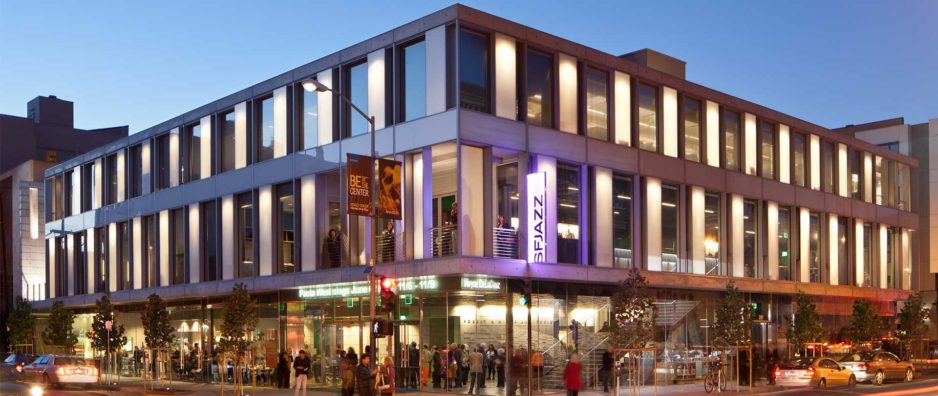
We are honored to announce that we will be performing live on April 25th at a sold-out KQED  event featuring Bill Nye at SF JAZZ in San Francisco.   

Once the host of the popular public broadcasting show Bill Nye, the Science Guy and now CEO of the Planetary Society, he advocates the importance of science, research and discovery. This sold-out event will feature Bill in a special conversation with KQED Senior Science Editor Kat Snow.  

We will perform an excerpt from Climate, by composer Erik Ian Walker in collaboration with The ClimateMusic Project.  The band:  Erik Ian Walker, bass guitar; Michele Walther, violin; Tom Dimuzio, synth and live sampling; Scott Brazieal, keyboard

Welcoming DJ Spooky to our Leadership Council

Paul Miller aka dj-spooky, Leadership Council

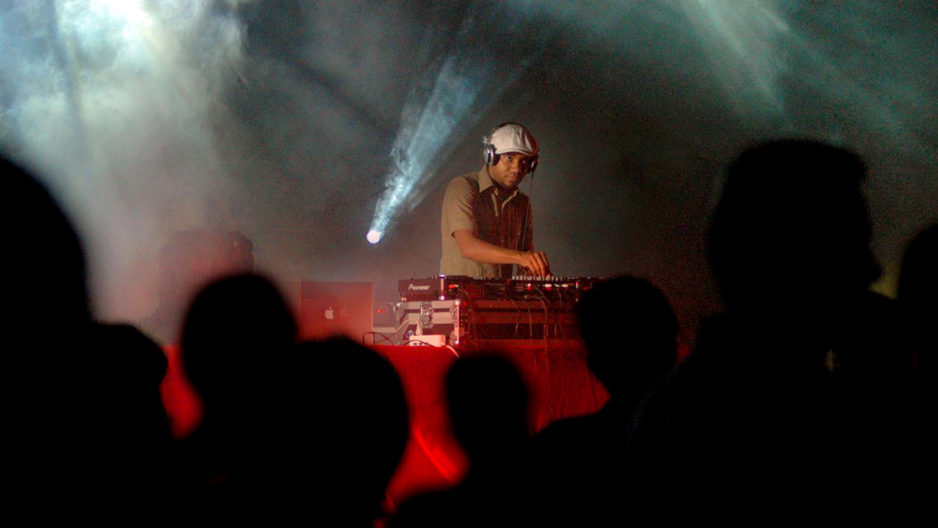
We are honored to announce that Paul Miller, aka DJ Spooky, is joining our Leadership Council. Named by National Geographic as an Emerging Explorer in 2014, Paul is a writer, artist and musician who lives and works in NYC. His award winning first book, Rhythm Science, was published by MIT Press in 2005, followed by Sound Unbound in 2008 and The Book of Ice in 2011. Miller’s work has been exhibited at museums and biennials throughout the world. He has performed in a wide variety of venues including The Tate Modern, The Guggenheim Museum, and The Herod Atticus Theater at the Acropolis, and has collaborated with a wide variety of artists from Chuck D to Yoko Ono. The iPhone App he developed with Music Soft Arts has been downloaded several million times. Most recently, Paul was awarded a $100,000 Hewlett Foundation grant to work with the Internet Archive to create an 11-movement multimedia production for string quartet, vocalist, and an original electronic instrument.   Please visit http://djspooky.com/ 

ABOUT OUR LEADERSHIP COUNCIL

Our Leadership Council provides expert guidance and collaboration to further The ClimateMusic Project’s goals, support fundraising, and enhance the Project’s visibility. The Council consists of visionary community leaders, committed to climate change action who wish to support our unique and powerful science-based approach to advance climate literacy and drive action through music.  For a complete roster and bios of our Council members, please see the Who We Are page on this site. 

The ClimateMusic Project Live in Mexico City!

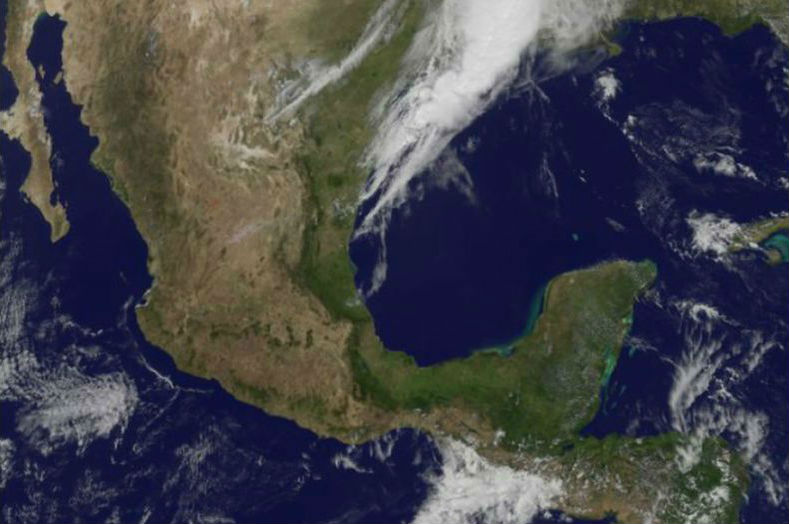
We are thrilled to announce our first live international show!  We’ll be appearing at the World Bank’s Fifth Global Understanding Risk Forum, scheduled for Mexico City,  Mexico at the stunning Palacio de Mineria, May 14-18, 2018. 

On May 17th, we will perform our original portfolio work, “Climate”, by composer Erik Ian Walker in collaboration with The ClimateMusic Project.  Erik, on keyboard, will be joined by Michele Walther on violin; Thomas Dimuzio, synthesizer and live sampling; Bill Noertker on bass guitar; and Scott Brazieal on keyboard.  Dr. William Collins, The ClimateMusic Project’s chief science advisor, will be on hand to introduce our work and engage with the audience post concert. 

Organized under the auspices of the World Bank Group,  Understanding Risk (UR) is an open and global community of over 6,500 experts and practitioners interested and active in disaster risk identification. UR community members share knowledge and experience, collaborate, and discuss innovation and best practice in risk assessment and risk communication. The community convenes every two years at UR Forums – five-day events that highlight best practices, facilitate partnerships and showcase the latest technical know-how in disaster risk identification.

For more information about the conference, please click on the image:

Introducing our newest Solutions Partner: Re-Volv

We are delighted to highlight Re-Volv as our newest solutions partner.  

RE-volv lets people put solar on the places they care about, giving them a way to take direct action on climate change. They are building a global community of clean energy supporters, creating a cultural shift for solar, and tangibly acting on climate change by reducing carbon emissions. For more information about Re-Volv, please click on the logo.

WHAT ARE SOLUTIONS PARTNERS?

 The ClimateMusic Project’s powerful audio-visual experiences generate a visceral understanding of the urgency for action on climate change and a new motivation to act.   Our solutions partners are highly-regarded organizations that can provide a pathway for this audience energy to facilitate individual and community action on the ground, including: 

  • Deepening additional learning about climate change
  • Accelerating the adoption of renewable energy and energy efficiency
  • Building support for policies that fight climate change
  • Generating resources for projects with a proven track-record in reducing   carbon emissions
  • Creating community around the issue in a way that encourages broad public engagement
  • Growing solutions that address critical related issues like environmental justice, agriculture and food systems, and water.

 In the next month, we’ll be creating a new page that will highlight the work of all of our solutions partners…stay tuned!

The ClimateMusic Project Heads to Campus!

We are pleased to announce that beginning this month, we will be actively working with the San Francisco Conservatory of Music’s Technology and Applied Composition Program in a classroom setting to explore the range of the possible in making music from climate data.  Over the past few months we have been prepping data and strategies for interacting with the class, and we will kick-off our engagement with students at a first session later this month.  The class will culminate with a public concert of student work at the Conservatory on April 15th.  More detail to follow! 

International Debut

We are excited to announce that The ClimateMusic Project will mark its international debut on March 8th at an international science symposium in France!  This will be a video screening of our portfolio work, “Climate”, by composer Erik Ian Walker.  We are continuing to develop video and other virtual content that can be experienced by many more people than our live performances.  We are planning a robust schedule of both live and video/virtual performances in 2018, so keep your eyes on the Events page for the latest schedules.  

For more information on the screening in France, please visit: 


click on the logo

The ClimateMusic Project on Climate One

Happy New Year everyone! The ClimateMusic Project’s Dr. Bill Collins and Stephan Crawford sat down with Climate One’s Greg Dalton recently to talk about the intersection of art, climate science, and action on climate change.  You can access to podcast–which includes an interview with Ai Weiwei–by clicking on the logo below.  Note that the interview comes in at about minute 36. 

New work supported by The Zellerbach Family Foundation

We are thrilled to announce that The ClimateMusic Project has been awarded a grant from the Zellerbach Family Foundation!  The funds will be used to support the 2018 premiere of a new work by composer Richard Festinger (http://www.rafestinger.com/)  in collaboration with The ClimateMusic Project.  

You can access a video of Richard talking about the new work and his collaboration with The ClimateMusic Project below. Details about the premiere will be announced in early 2018.

Read All About It! New media coverage of The ClimateMusic Project

We’ve had some recent press coverage that we’d like to share with everyone!  

THE VERGE, Nov 11, 2017

LISTEN TO MUSIC MADE TO THE RHYTHM OF GLOBAL WARMING

CITYLAB, October 10, 2017

THE ODD, DISCONCERTING MUSIC OF CLIMATE CHANGE

KQED

SCIENCE MEETS ART: MUSIC TO FIGHT GLOBAL WARMING

KALW

THE SOUND OF CLIMATE CHANGE

INTERNATIONAL

NEON, [CLIMAT] 16th November 2017

UNE MUSIQUE CRÉÉE AU RYTHME DU RÉCHAUFFEMENT CLIMATIQUE

BBC World Service

TURNING CLIMATE CHANGE DATA INTO MUSIC

SRF (Switzerland, in German)

EXPERIENCE CLIMATE CHANGE WITH THE SENSES

STAY IN THE LOOP: News and updates

Spotlight on the people behind The ClimateMusic Project

OUR TEAM IS MADE UP OF HIGHLY DIVERSE, CREATIVE, TALENTED, AND ENERGETIC INDIVIDUALS LIKE SARA CHUN, OUR DIRECTOR FOR PARTNERSHIPS. 

An environmental scientist by training, Sara has worked in Washington, D.C. as a Science & Technology Policy Fellow sponsored by the American Association for the Advancement of Science.  At the U.S. Department of State, she managed the environment, science, technology, and health portfolio in the Office of Chinese and Mongolian Affairs. With the U.S. National Science Foundation, she catalyzed new frontiers of science research specifically around biodiversity.  Sara holds a Ph.D. in ecology from Duke University’s Nicholas School of the Environment and a B.A. in biology from Harvard University.

1.     What’s your role at The ClimateMusic Project?

Currently, I am Director of Partnerships, and I try to broaden and enhance The ClimateMusic Project’s network and visibility in the most strategic way—by forging connections to relevant organizations or people working in science, the environment, public policy, non-profits, government, etc.  However, I really see myself as a “Jane of all trades.”  Like most of the CMP staff, I try to do whatever is needed of me!

2.     How did you become involved?

I have been fortunate to witness the evolution of The ClimateMusic Project almost since its inception when Stephan Crawford (founder) came up with this brilliant, but as yet untested idea of representing climate data and our changing climate system through music.  I attended a few workshops where he was developing a proof of concept for the idea.  That was back in early 2014, I believe.  Since then, I have been lucky to attend the concert premier in fall 2015 and subsequent performances.  As an environmental scientist, I thought, “This is so cool!  How can I not get involved?”

3.     What do you think this collaboration between scientists and artists can achieve?

I am a firm believer in the STEM to STEAM movement, which is a campaign to incorporate Art (and Design) amongst the Science, Technology, Engineering and Math (STEM) fields.  The ClimateMusic Project is the perfect example of artists and scientists teaming up to create something bigger and more profound than what would come out of each discipline alone.  Ultimately, I believe “climate music”—that is driven by the science—has the ability to convey how our climate is changing in a visceral and emotional way compared to just a standard lecture.  By taking this “hearts and minds” approach, hopefully our audiences leave our concerts with a call to action!

4.     What’s your favorite kind of music, and whom would you like to see CMP collaborate with?

I have a pretty diverse taste in music and enjoy alternative, classic rock, grunge, jazz, and folk, to name a few.  U2 and Bruce Springsteen are on my wish list for top CMP collaborators!

5.     What advice would you give to someone who is looking to get involved in the fight against climate change?

I would say that no action is too small and don’t get discouraged!  There is so much you can do on a local and personal level.  Get involved civically and vote.  Make small changes in your personal lifestyle like visiting local farmers markets, taking public transportation, re-considering your energy choices.  Especially now, not all change will happen at the national (or international) level.  We all must be our own agents for positive change when it comes to combating climate change.